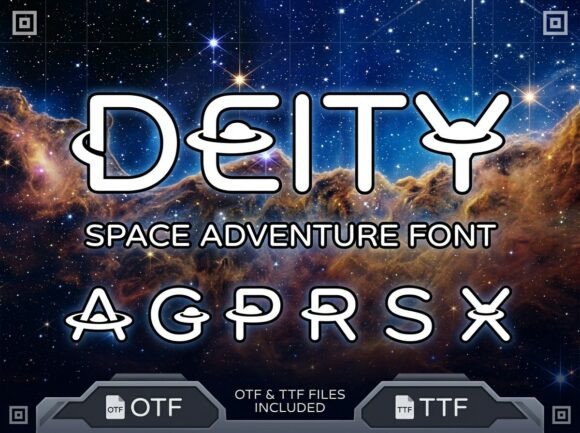
Deity: The Typeface for Galactic Impact
In the crowded landscape of modern typography, finding a typeface that genuinely captures a futuristic vision without feeling like a retro cliche is rare. Enter Deity, a space adventure font engineered to bridge the gap between the vastness of space and the clarity of digital interfaces. It isn't just a collection of letters; it is a high-concept visual language designed for the era of techno-optimism.
Decoding the Celestial Aesthetic
At its core, Deity is a display font characterized by clean, rounded monoline letterforms. However, its defining trait lies in the structural interruptions. Traditional horizontal crossbars and negative spaces are reimagined as stylized Saturn-like rings and planetary icons. This design choice creates a unique rhythm in the text, where every letter feels like a component of a larger solar system. The result is a typeface that maintains high legibility while offering an immediate sense of galactic wonder. It avoids the jagged, aggressive look of older "techno" fonts, favoring a sleek, friendly, yet highly advanced aesthetic.
Strategic Applications for Modern Branding
Understanding where to deploy a font like Deity is key to maximizing its impact. Because it is a heavy-weight display typeface, it excels in environments where grabbing attention is the primary goal. It is an extraordinary asset for:
- Tech Startups and App Logos: If your brand identity is built around innovation, AI, or connectivity, Deity offers a visual shorthand for "future-ready" without using generic clipart.
- Sci-Fi Gaming and Entertainment: The planetary motifs are perfect for game titles, loading screens, and HUD elements in space exploration or strategy games.
- Astronomical Branding: Museums, planetariums, and educational platforms can use Deity to make science feel accessible and exciting to a younger demographic.
- Cosmic Social Media Graphics: In a fast-scrolling feed, the distinctive shape of Deity’s letters creates an immediate stop-scroll effect, driving higher engagement rates for event announcements or product launches.
Typography Mechanics: Pairing and Hierarchy
While Deity is visually striking, using it effectively requires a thoughtful approach to visual hierarchy. As a rule of thumb for designers and content creators, this typeface should be reserved for headlines, sub-headers, and pull quotes. Its intricate detailing, while beautiful, can reduce reading speed in long-form body copy.
To create a balanced composition, pair Deity with a neutral sans serif font for your body text. A clean geometric sans serif will ground the whimsical nature of Deity, ensuring your message remains professional and easy to read. For example, using Deity for a product launch headline followed by a simple sans serif paragraph creates a dynamic contrast that guides the reader’s eye naturally from the "wow" factor to the informational details.
Practical Considerations for Commercial Use
For entrepreneurs and small business owners, choosing a premium font is an investment in brand consistency. Before integrating Deity into your permanent brand assets, consider the following practical steps:
- Evaluate the Scope: Review the font's character map. Does it support the specific languages or special characters required for your market?
- Test the Weight: Ensure the monoline weight works well against your typical background colors. High contrast is usually best for this specific style.
- Licensing: As a commercial font, verify that the license covers your intended usage, whether that is for a single client project, a self-published book cover, or unlimited merchandise printing.
Ultimately, Deity is more than just a stylistic choice; it is a strategic design tool. By leveraging its unique ring-based geometry, you can infuse your projects with a sense of wonder and high-tech charm that resonates with audiences looking toward the future. Whether you are crafting a header for a space-themed campaign or designing a logo for a futuristic app, this typeface ensures your work leaves a lasting, celestial impression.